
About iPlay Phonics
The story behind the world's first voice interactive phonics learning game.
Our Founder's Story
iPlay Phonics was founded by Aileen McSorley, a language teacher and specialist in Learning Support at Holy Cross College in Strabane. She came up with the idea for iPlay Phonics after thinking of ways to keep her own two children occupied in the evenings while helping them to learn.
Based on the beloved board game Snakes and Ladders, iPlay Phonics has been designed specifically to increase children's self-confidence in literacy. What started as a mother's solution has grown into a powerful educational tool used in schools across the UK and Ireland.
Previously published by the University of Glasgow and sold throughout England, Scotland and Wales, iPlay Phonics is the world's first educational resource to use voice interactive technology to aid in the learning of reading and speaking.
As Aileen says: "It is a fun-based, interactive computer board game with 14 different levels of difficulty, so your child can reach their full potential at their own pace."
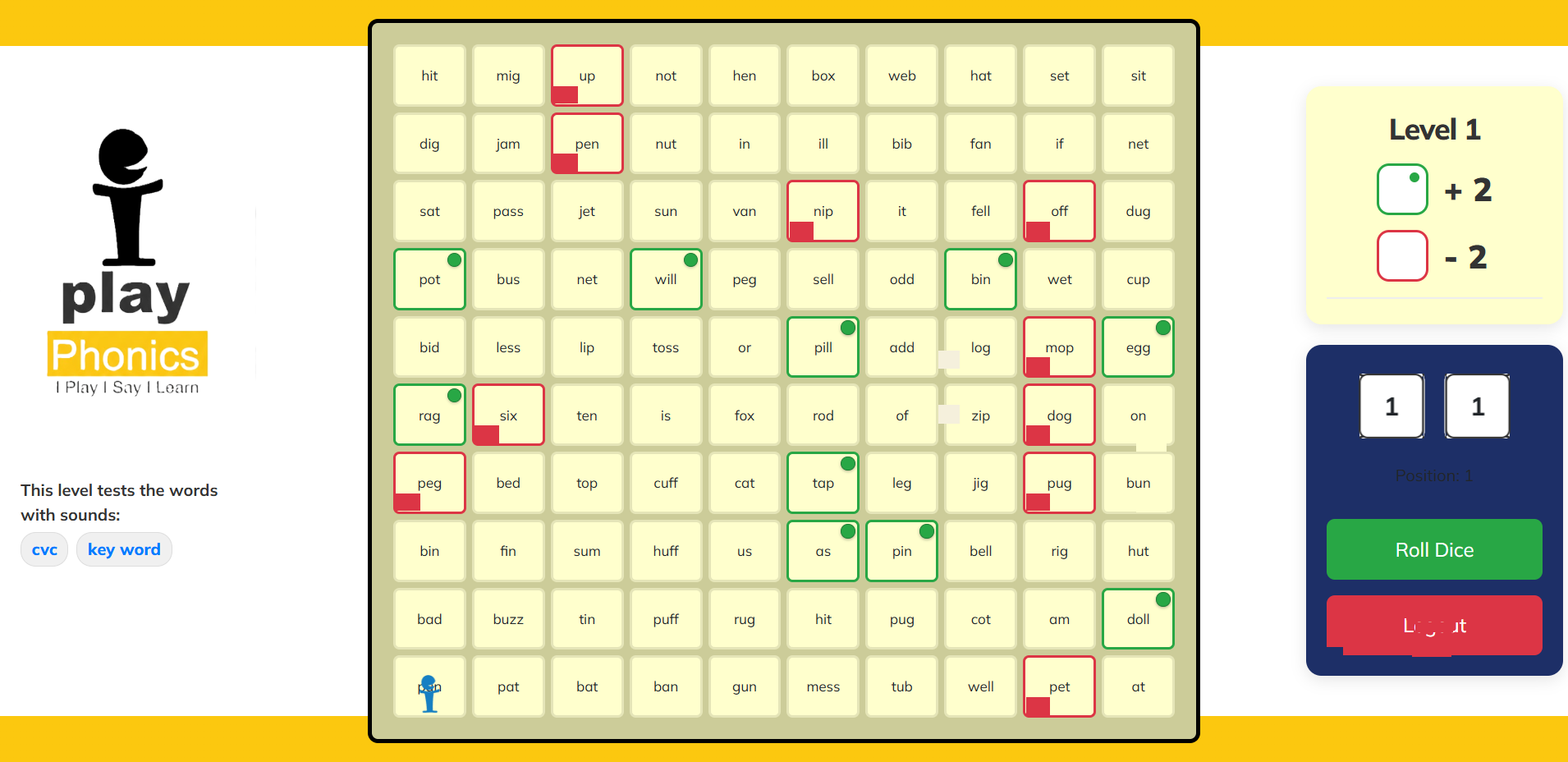
What iPlay Phonics Was Built To Do
Founder Aileen McSorley designed iPlay Phonics with clear, measurable goals for every child.
Increase Self-Confidence in Literacy
Every aspect of the game is designed to build confidence, not erode it. There is no perceived failure — only progress and encouragement.
Improve Recognition of Vocabulary
Starting with 100 key words and progressing through 14 levels linked to specific phonemes and graphemes, vocabulary recognition grows systematically.
Make Learning Fun
Above all this is a game and games are fun. Children are fascinated with something new. The challenge is to get to the top of the board and win.
Encourage Pronunciation of Words
The voice interactive technology ensures correct pronunciation of the written word, thus aiding fluency. Immediate feedback builds speed and accuracy.
Allow Minor Mispronunciations
The system is designed to allow minor mispronunciations — gently guiding rather than punishing. Words incorrectly pronounced are flagged for revision, not failure.
No Perceived Failure
The immediacy of feedback prevents an emotional response — the main cause of barriers to learning. Children never feel they've failed; they just keep playing.
Why Phonics Matters
Understanding the research and methodology behind effective reading instruction.
The Phonics Approach
There are 40+ sounds in English. When these phonics are used fluently — saying the sounds that go with the letters — a learner's word attack skills, fluency and confidence are all increased.
In order to read a language it is necessary to decode the letters. This means an understanding of phonics is essential. It is for this reason that the government and the Inspectorate insist on the use of phonics in teaching for language acquisition — so by law teachers must use phonics programmes.
The phonic skill is to be able to look at the letters, say the sounds and hear the word being read. It is the ability to blend these sounds together that provides the ability to read unknown words. The skill of being able to blend letters together places the reader in a better position to master irregular unknown words.
Immediacy of Feedback
The immediacy of feedback to students is important for two reasons:
- Fluency and confidence — the faster the letter and sound is recognised, the easier it is for reading and writing to take place
- It prevents an emotional response — the main cause of barriers to learning
Best Practice
It is recommended that one letter sound is introduced each day and lower case letters are first to be taught. It is important that the letters are introduced by their SOUND and not their names.
Reinforcement of letter sounds is very important. Fluency in blending ensures few, if any, problems with reading. As a result the focus then becomes comprehension of the text.
Proven in Practice
From a mother's idea to a published educational resource used across the UK.
University of Glasgow
Previously published by the University of Glasgow and sold throughout England, Scotland and Wales as a validated educational resource.
Classroom Proven
Used successfully in classrooms at both primary and secondary level. Has aided remediation into the mainstream for children with varying degrees of dyslexia.
UK & Ireland Wide
Sold throughout England, Scotland, Wales and Ireland. Applicable to all phonic schemes taught in all schools. Compatible with government phonics requirements.
Try iPlay Phonics Today
See the difference voice interactive phonics can make for your child or students.